
Newz Desk, Durgapur: The Union Ministry of Education has asked the West Bengal government to undertake a comprehensive rationalisation of government schools with low student enrolment, a move that could lead to the merger or closure of thousands of primary and upper primary schools across the state.
The recommendation was made during the Project Approval Board (PAB) meeting for the Samagra Shiksha programme for the 2026-27 financial year, held on June 12. Senior officials from the Ministry of Education and the West Bengal government reviewed the state’s school education scenario and discussed measures to improve the efficient utilisation of educational infrastructure and teaching staff.
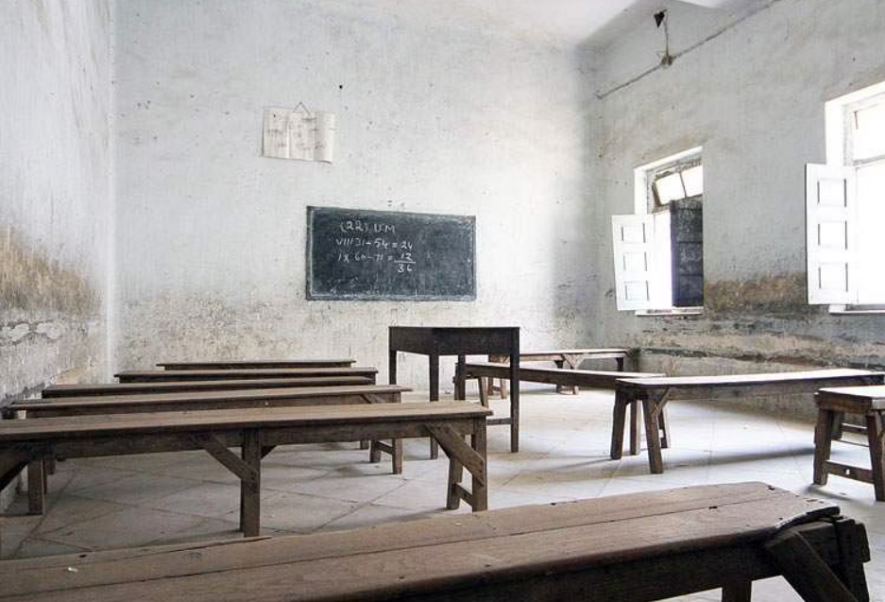
According to the meeting records, West Bengal has 66,675 primary schools, of which 5,309 are single-teacher schools. In addition, 13,186 schools have fewer than 30 students, while 4,564 schools enrol fewer than 15 students. At the upper primary level, the state has 6,333 schools, including 878 single-teacher institutions, 165 schools with fewer than 30 students and 849 schools with fewer than five students.
The Ministry also highlighted concerns over the pupil-teacher ratio in many schools. Around one-fourth of primary schools and nearly one-third of upper primary schools reportedly have an adverse pupil-teacher ratio, indicating an imbalance in the deployment of teaching staff.
The Centre has advised the state to consolidate schools where necessary, recruit teachers strategically and expedite the upgradation of educational institutions wherever infrastructure permits. The objective, officials said, is to ensure better utilisation of public resources while improving the quality of education.
The recommendation comes amid growing national efforts to optimise school infrastructure in response to declining enrolment in many government institutions. Over the past decade, several states have adopted school rationalisation policies aimed at merging institutions with very low student strength into nearby schools.
A recent policy analysis by NITI Aayog pointed to another challenge in West Bengal’s education system. According to the report, the state had 3,812 government schools with zero enrolment during the 2024-25 academic year, the highest among all states. Despite having no students, these schools continued to receive teachers and financial support, raising concerns about the efficient allocation of public resources.
Educationists, however, have expressed reservations over large-scale school closures. They argue that schools located close to villages play a crucial role in ensuring access to education, particularly for children from economically weaker families and marginalised communities. Experts caution that increasing the distance between home and school may discourage attendance and contribute to higher dropout rates, especially among younger students.
Legal experts have also pointed out that the Right of Children to Free and Compulsory Education (RTE) Act emphasises neighbourhood schooling to ensure universal access to elementary education. They believe that any rationalisation exercise should be undertaken carefully, ensuring that children’s right to education is not compromised.
While the state government has not yet announced its course of action, the Centre’s recommendations are expected to shape discussions on school planning and resource allocation in West Bengal in the coming months.