
Newz Desk, Durgapur: As the Narendra Modi government marks 12 years in office with the slogan “12 Saal – Vishwas ke, Vikas ke, Jan-Kalyan ke” (12 Years of Trust, Development and Public Welfare), a recent decision to sharply reduce subsidised LPG refills under the Pradhan Mantri Ujjwala Yojana (PMUY) has sparked questions about the government’s welfare priorities.
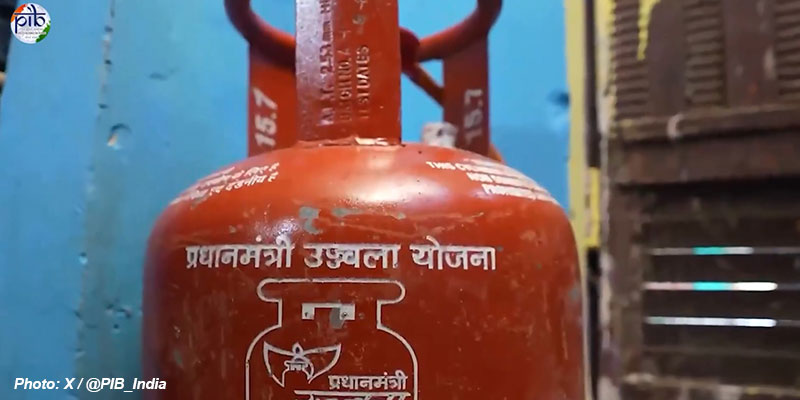
The Centre has cut the annual quota of subsidised LPG cylinders available to Ujjwala beneficiaries from nine to four. The move comes less than a year after the quota was reduced from the original 12 cylinders to nine.
Launched in 2016, the Ujjwala scheme has been one of the Modi government’s flagship welfare programmes, providing free LPG connections to women from poor households and helping millions transition from traditional cooking fuels such as firewood and coal.
However, critics argue that reducing the number of subsidised refills undermines the very objective of the scheme. With LPG prices rising steadily, many low-income families may find it difficult to afford cylinders beyond the subsidised quota.
The price of a 14.2-kg LPG cylinder in Delhi currently stands at ₹942 following recent price hikes. Even after the ₹300 subsidy, Ujjwala beneficiaries must pay ₹642 per refill.
Opposition leaders and social activists have questioned how a reduction in benefits aligns with the government’s claims of expanding welfare and improving the lives of the poor. They argue that while access to LPG connections has increased dramatically, affordability remains a major challenge for many households.
The government, however, has defended the decision. Petroleum Ministry Additional Secretary Praveen Mal Khanooja said the revised entitlement reflects the average annual consumption pattern of Ujjwala beneficiaries. According to the government, the reduction is based on actual usage data rather than an attempt to curtail benefits.
The debate highlights a broader question confronting policymakers: should welfare programmes be measured by the number of beneficiaries enrolled, or by the extent to which beneficiaries can continue to use the services provided?
As the government celebrates a decade-plus of governance under the banner of trust, development and public welfare, the reduction in subsidised LPG support is likely to fuel a wider discussion on the balance between fiscal prudence and social protection.
For millions of Ujjwala households, the issue is less about slogans and more about a practical concern: whether clean cooking fuel remains affordable enough to stay within reach.