

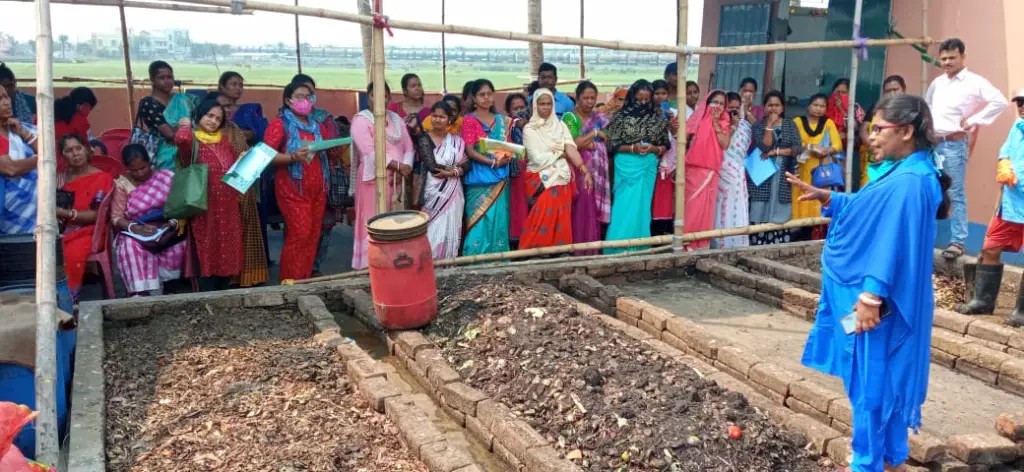
Newz Desk, Durgapur: West Bengal now hosts the highest number of women’s self-help groups (SHGs) in the country, crossing 12 lakh groups with a combined membership of nearly 1.2 crore women. The information was shared on Friday by Sudip Sarkar, additional CEO of the West Bengal State Rural Livelihoods Mission (WBSRLM), during a state-level workshop on Water, Sanitation and Hygiene (WASH).
The workshop, attended by around 120 representatives from multiple government departments, sought to outline a coordinated roadmap for achieving long-term sustainability in rural WASH practices. The initiative is being implemented under the WBSRLM, with technical support from Water for People, and aims to equip SHGs, community resource persons and district-level trainers to drive behaviour change in safe water usage, sanitation practices and hygiene management.
“SHGs are emerging not just as beneficiaries of government schemes, but as powerful agents of change,” said Pijush Goswami, state coordinator and additional secretary of the panchayat & rural development department. “From promoting hygiene habits to overseeing local water systems and ensuring timely upkeep, they are playing a crucial role in strengthening community-led WASH efforts.”
The workshop saw participation from several departments, including panchayats & rural development, public health engineering (PHED), water resources investigation and development (WRIDD), health, women and child development, horticulture and others. Officials highlighted the need for better coordination between infrastructure development, governance and community mobilisation to enhance water management at the village level.
While programmes like Jal Jeevan Mission and Swachh Bharat Mission-Gramin Phase II have significantly improved access to clean water and sanitation in recent years, officials acknowledged that certain gaps persist. They emphasised that SHGs—given their grassroots presence and organisational strength—are well positioned to help bridge these gaps and create more resilient, community-driven WASH systems.
Image courtesy@internet